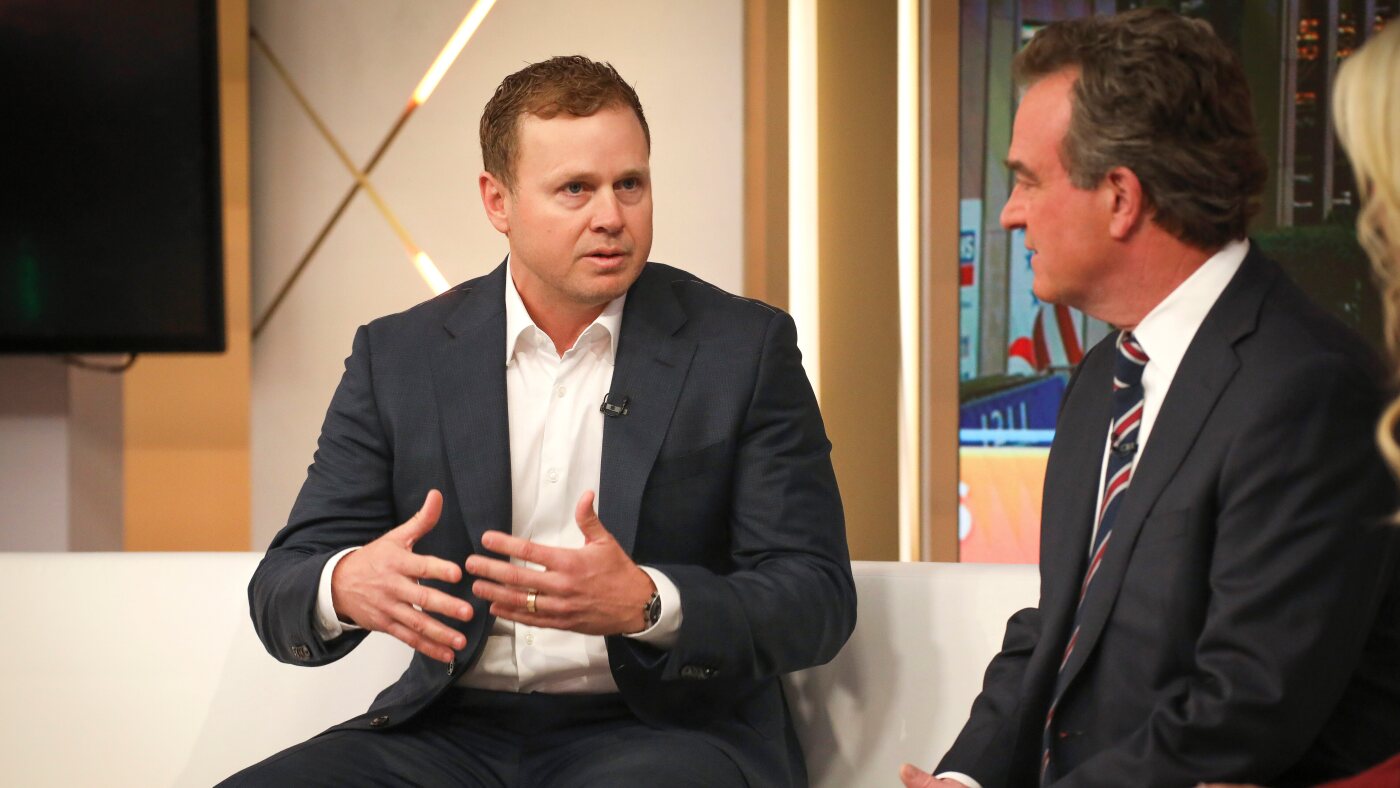
Free membership gives investors access to expert stock analysis, market forecasts, and real-time investment opportunities updated daily. Former reality TV star Spencer Pratt is leveraging edgy humor, AI-generated content, and combative rhetoric on social media to build attention for a potential Los Angeles mayoral bid. Political experts suggest this approach could represent the future of online campaigning, with implications for how platforms drive engagement and political advertising revenue.
Live News
WinHttpSendRequest failed: 0 Real-time updates allow for rapid adjustments in trading strategies. Investors can reallocate capital, hedge positions, or take profits quickly when unexpected market movements occur. Spencer Pratt, best known for his role on the reality series The Hills, has been flooding social media platforms with a mix of provocative humor, AI-generated "slop," and confrontational posts. His goal, according to the NPR report, is to capture the attention of the "very online" electorate and secure votes for a potential run for mayor of Los Angeles. Pratt’s strategy — described as "winning the internet" — relies on high-frequency, low-cost content that triggers algorithmic amplification. The combative tone and edgy humor are designed to spark shares, comments, and reactions, effectively turning his personal brand into a campaign engine. Some political experts cited in the report view this tactic as a blueprint for future digital campaigning, where authenticity is secondary to virality. The approach highlights a growing intersection between entertainment, technology, and politics. Pratt’s use of AI-generated material further underscores the role of emerging tools in crafting political messages. While the article does not specify exact metrics of his online engagement, the characterization of his success suggests significant activity across platforms.
Spencer Pratt's Online Campaign Strategy May Reshape Political Engagement and Social Media MonetizationCross-market monitoring is particularly valuable during periods of high volatility. Traders can observe how changes in one sector might impact another, allowing for more proactive risk management.Sector rotation analysis is a valuable tool for capturing market cycles. By observing which sectors outperform during specific macro conditions, professionals can strategically allocate capital to capitalize on emerging trends while mitigating potential losses in underperforming areas.Investors often rely on both quantitative and qualitative inputs. Combining data with news and sentiment provides a fuller picture.
Key Highlights
WinHttpSendRequest failed: 0 While data access has improved, interpretation remains crucial. Traders may observe similar metrics but draw different conclusions depending on their strategy, risk tolerance, and market experience. Developing analytical skills is as important as having access to data. - High-engagement, low-cost content: Pratt’s strategy relies on posts that generate organic shares and comments, reducing the need for traditional paid advertising. This model could appeal to other candidates with limited budgets. - Rise of AI in campaigns: The use of AI-generated “slop” may lower the barrier to producing campaign content, potentially leading to a flood of automated or semi-automated messages across social feeds. - Algorithmic favoritism: Social media algorithms often prioritize provocative and divisive content to maximize user time on site. Pratt’s combative rhetoric aligns with this incentive structure, likely boosting his visibility. - Regulatory considerations: As candidates adopt edgier, potentially misleading tactics, regulators and platform moderators may face pressure to update policies around political content, especially content generated by AI. - Monetization implications: Increased political engagement could drive higher advertising revenue for platforms, but also raise risks of brand-unsafe environments that may deter conventional advertisers.
Spencer Pratt's Online Campaign Strategy May Reshape Political Engagement and Social Media MonetizationExpert investors recognize that not all technical signals carry equal weight. Validation across multiple indicators—such as moving averages, RSI, and MACD—ensures that observed patterns are significant and reduces the likelihood of false positives.Real-time alerts can help traders respond quickly to market events. This reduces the need for constant manual monitoring.Technical analysis can be enhanced by layering multiple indicators together. For example, combining moving averages with momentum oscillators often provides clearer signals than relying on a single tool. This approach can help confirm trends and reduce false signals in volatile markets.
Expert Insights
WinHttpSendRequest failed: 0 Some traders focus on short-term price movements, while others adopt long-term perspectives. Both approaches can benefit from real-time data, but their interpretation and application differ significantly. From a professional perspective, Pratt’s campaign strategy suggests a shift in how political candidates may allocate resources. Rather than relying on traditional media buys or grassroots organizing, a candidate could focus on creating viral moments that are organically amplified. This could reduce the cost of entry for political newcomers but also increase the noise and potential for disinformation. For social media platforms, such campaigns might boost user engagement metrics and time spent on site, which are closely tied to advertising revenue. However, the combative and often unverified nature of AI-generated content could complicate content moderation efforts and expose platforms to political scrutiny. Companies like Meta Platforms and X (formerly Twitter) may face pressure to enforce stricter rules on AI-generated political ads, similar to recent regulations in the European Union. Investors watching the intersection of media and technology should note that while Pratt’s tactic may be novel, its scalability remains uncertain. If his approach becomes a template, the market for political social media consulting and AI content tools could expand. Conversely, a backlash from voters or regulators could temper adoption. The financial impact on social media companies would likely be mixed: higher short-term engagement versus long-term moderation costs and reputational risk. Analysts may monitor platform policy changes and political ad spending trends in the 2025 election cycle for clues about durability of this strategy. Disclaimer: This analysis is for informational purposes only and does not constitute investment advice.